
Cupping Therapy in Liverpool: What It Is, What It Feels Like and Who It Can Help
 By Romaniya (Roma), VTCT Level 4 sports massage therapist
· Updated
Cupping tends to get one of two reactions when I mention it: genuine curiosity, or “isn’t that the thing with the round bruise marks?” Both reactions are fair — and the second one is actually a decent starting point for explaining what it is.
I trained in dry and fire cupping through The Acupuncture Society and completed additional training at Buddha Therapies Academy, both in 2025, alongside my sports massage qualifications — you can see the full list on my about page. It’s a technique I offer alongside massage, not instead of it, for clients who want to try something different or who have specific areas that respond well to it.
What cupping actually is
Cupping uses small cups placed on the skin with suction to lift the surface tissue slightly, rather than pressing down into it the way massage does. That’s the fundamental difference — massage compresses tissue, cupping decompresses it. I use two approaches:
- Dry cupping — cups are applied using a manual pump or similar method to create suction, without heat.
- Fire cupping — a brief flame is used inside the cup to create suction through changes in air pressure, then removed before the cup is placed on the skin. The cup itself doesn’t get hot enough to burn — the flame is only there to create the vacuum.
The cups are usually left in place for a few minutes, either static or moved slowly across the area (gliding cupping), depending on what we’re working on.
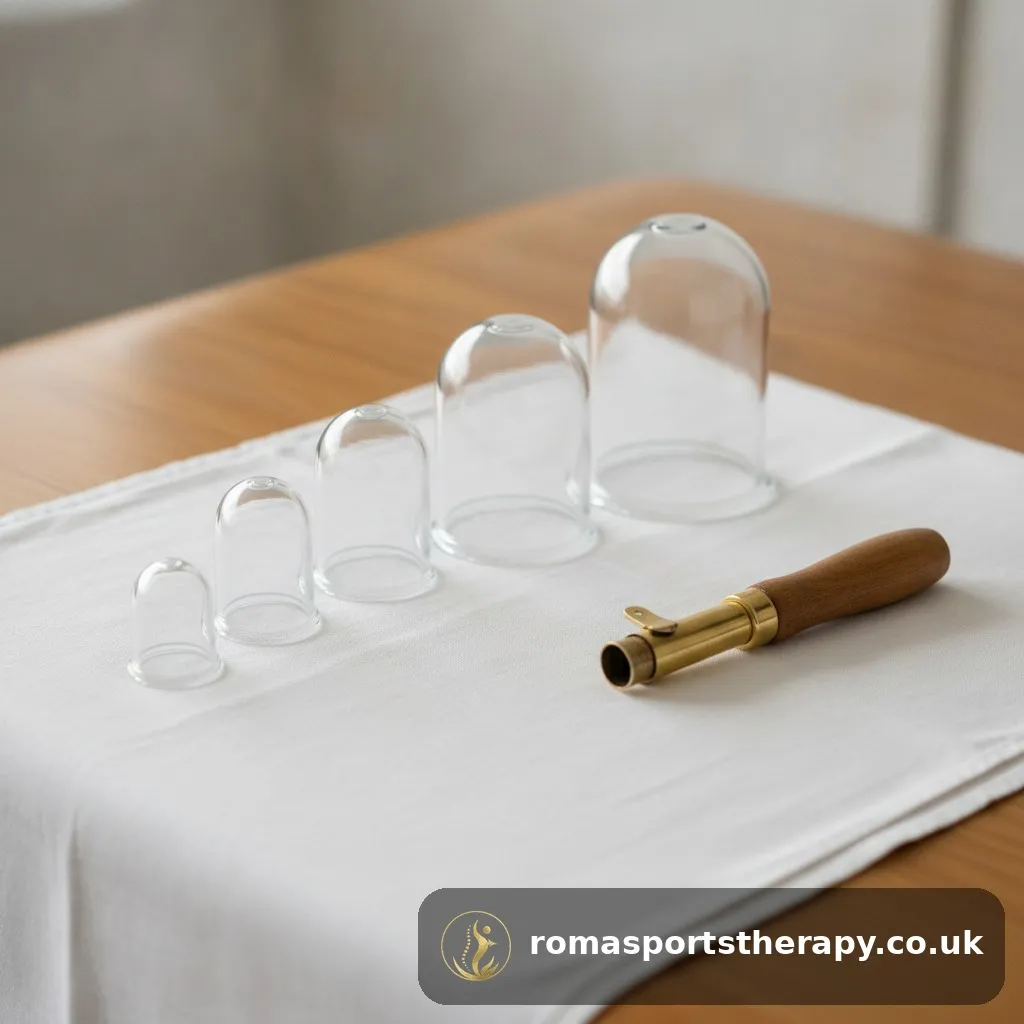
What it feels like — and what the marks actually are
Most clients describe cupping as a pulling or tight sensation rather than pain — quite different from the pressure of deep tissue work. It’s generally well tolerated, though like any treatment, sensitivity varies from person to person.
The marks are the part people ask about most. They’re a normal, temporary response to the suction — similar in appearance to a bruise, caused by small blood vessels near the surface responding to the pressure change, but they’re usually not painful in the way a bruise from an impact would be. They typically fade within a few days to just over a week, depending on the individual and how the skin responds. I always talk clients through this before we start, so there are no surprises afterwards — if you’ve got something important like a wedding or a photoshoot coming up, it’s worth timing cupping well in advance, or choosing massage instead for that session.
Who cupping tends to help
Cupping is often used for areas of persistent muscular tightness — the upper back and shoulders come up a lot, along with tight calves in runners. Some clients like combining it with sports massage in the same session — massage to work the muscle directly, cupping to address the same area from a different angle. It’s a genuinely useful addition for training-related recovery and for stubborn tension that hasn’t fully responded to massage alone, including some of the upper back and shoulder tightness I see regularly.
I’ll be honest about the evidence here too: research into cupping is more limited than for massage, and results are mixed. I’d position it as a complementary technique that plenty of clients genuinely like and find helpful, rather than something with guaranteed, proven outcomes. If you’re curious and open to trying it, that’s the right mindset to come in with.
When cupping isn’t suitable
There are situations where I wouldn’t recommend cupping, including:
- Broken, irritated or infected skin in the treatment area
- Certain skin conditions — always worth mentioning anything relevant beforehand
- Blood clotting disorders or if you’re taking blood-thinning medication, without medical clearance first
- Directly over varicose veins
- During pregnancy, unless you’ve checked with your midwife or GP first
If any of this applies to you, or you’re just unsure, let me know when you book, or check with your GP first — I’d rather have that conversation upfront than find out mid-session.
Booking cupping
Cupping isn’t currently listed as a standalone priced treatment on my treatments page — it’s usually incorporated into a session or discussed directly, so the best way to arrange it is to get in touch and I’ll talk you through availability and what makes sense for what you’re dealing with.
FAQs
Does cupping hurt?
Most people find it more of a pulling sensation than pain. It’s generally well tolerated, though sensitivity varies.
How long do cupping marks last?
Typically a few days up to around a week, depending on the individual.
Is cupping only for athletes?
No — it’s suited to anyone with persistent muscular tightness, not just people who train.
Can I combine cupping with a massage in the same appointment?
Yes, this is a common combination and one many clients prefer — get in touch to arrange it.
Is cupping safe for everyone?
Not always — see the contraindications above. If you have a health condition, are pregnant, or are on blood-thinning medication, check with a GP first or let me know when booking.
How often should I get cupping?
It varies by what you’re using it for — occasional sessions for specific tight spots, or more regularly alongside massage as part of an ongoing routine. Worth discussing when you book.
If cupping sounds like something you’d like to try, either on its own or alongside massage, get in touch and I can talk you through it and get you booked in.